
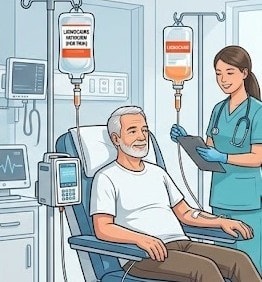
Why This Procedure?
Lignocaine (also known as lidocaine) is a local anaesthetic that blocks nerve signals. Given intravenously in low dose, under close medical supervision, it can also modulate pain pathways and reduce certain types of chronic or neuropathic (nerve-related) pain.
The exact mechanism is complex, but the overall effect is a temporary reduction in pain signalling: it reduces abnormal nerve firing, dampens overactive pain pathways, may help "reset" heightened pain sensitivity, and can reduce inflammation-related nerve irritation.
Please note that while intravenous lignocaine is widely used in specialist pain medicine for these conditions, this is an off-label use of an Australian-registered medication — it is used outside its officially registered indication. This will be discussed in detail during your informed consent process.
Who Might Benefit?
This procedure may help if you have:
- Neuropathic (nerve-related) pain
- Complex regional pain syndrome (CRPS)
- Postherpetic neuralgia
- Fibromyalgia
- Chronic pain from injury or surgery
- Pain that has not responded adequately to other treatments
How Effective Will It Be, and How Soon?
It isn't possible to guarantee how any individual will respond. As a general guide:
- Onset: some people notice pain relief immediately during or soon after the infusion, while others notice changes gradually over the following days.
- Course of treatment: duration and frequency vary based on your individual needs and response — multiple 30-minute sessions may be recommended, sometimes on consecutive days.
Risks and Safety
Lignocaine infusions are generally considered safe when given by a trained specialist with continuous monitoring, though as with any medical treatment benefit cannot be guaranteed and complications can occur.
Common, minor effects:
- A cooling sensation at the IV site — this is expected
- Dizziness or light-headedness
- Mild nausea or vomiting
- Temporary drowsiness
- Shivering or a cold sensation
Rare, more serious risks:
- Changes in heart rhythm or blood pressure — this is why your heart rhythm and vital signs are continuously monitored throughout the infusion
- Rarely, seizure or loss of consciousness if lignocaine levels rise too high — see the note below on early warning signs, which staff watch for so the infusion can be adjusted before this happens
- Allergic reaction to lignocaine or other medications used
Before the Procedure
- This is usually a day-hospital treatment — you go home the same day rather than being admitted overnight. It may be one session or several, sometimes alongside other procedures
- Some physicians admit patients for this treatment, including continuous multi-day infusions. Dr Amirabadi does not generally admit patients for this, except in rare or complex circumstances — this would be discussed with you if relevant
- Tell us if you are, or might be, pregnant, or if you are breastfeeding
- Tell us about any history of heart disease, arrhythmia, a pacemaker, or known heart conduction delays, or epilepsy/seizures
- Tell us about any allergies, and all current medications you take
- You will usually be asked to fast for at least 6 hours before the infusion
- Arrange for a responsible adult to drive or escort you home afterwards
What Happens During the Procedure
- An intravenous (IV) line is placed in your arm for the infusion
- You will be provided with comfortable bedding and a private space
- The infusion is given over approximately 30 minutes, repeated over separate day-hospital sessions if needed — a continuous round-the-clock infusion over several days is an inpatient alternative some centres use, but not how this clinic delivers it
- Your heart rhythm, blood pressure, and other vital signs are continuously monitored throughout by medical staff, who will adjust the infusion rate as needed
- You may feel a cooling sensation where the infusion is given — this is expected
Tell staff immediately if you notice: a metallic taste, numbness or tingling around your lips, mouth, or tongue, or ringing in your ears. These are early warning signs that lignocaine levels may be rising too high (not just an ordinary side effect) — reporting them straight away lets staff adjust or stop the infusion before anything more serious develops.
After the Procedure
- You will be monitored in a recovery area until you are ready to go home, usually 1-2 hours after the infusion ends
- You may feel drowsy, mildly disoriented, or fatigued for the remainder of the day
- You must not drive a motor vehicle, ride a bicycle, operate machinery, sign legal documents, or make important decisions for at least 24 hours following your infusion, and a responsible adult must accompany you home
- Some people notice pain relief immediately, while others notice changes over the following days
- Follow-up appointments will be arranged to assess how well the infusion worked
- Report any persistent or concerning symptoms to your treating team
When to Seek Help
Contact your GP, Total Pain Clinic, or your nearest Emergency Department if you notice:
- New chest pain, palpitations, or an irregular heartbeat
- Seizure, fainting, or loss of consciousness
- Confusion, slurred speech, or persistent numbness/tingling well beyond the infusion
- Signs of an allergic reaction (rash, swelling, difficulty breathing)
- Fever or feeling generally unwell
Follow-Up
Follow-up appointments will be made to assess how well the infusion worked and to plan any further treatment. Please ask your doctor any questions before you proceed; you will be asked to sign a consent form if you agree to go ahead.